
How Al Jazeera Built a Media Machine for the Algorithmic Age

The announcement barely registered.
Al Jazeera quietly revealed the deployment of a new artificial intelligence system developed in partnership with Google Cloud. The language was deliberately technical and reassuring: modernize editorial workflows, improve newsroom efficiency, train other media organizations. At a time when every major media group is experimenting with automation, the news sounded routine, almost boring.
It wasn’t.
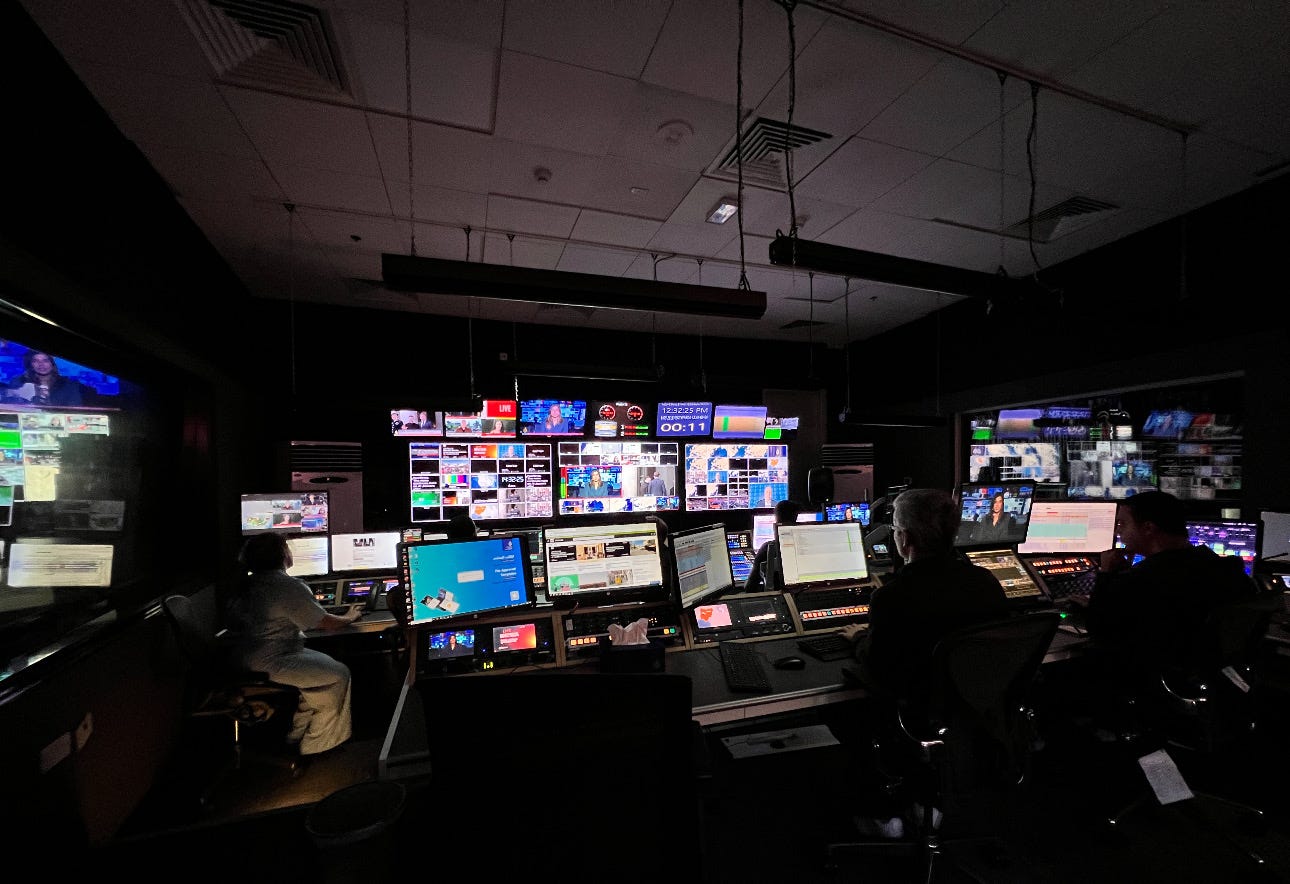
Because nothing about Al Jazeera—and nothing about Qatar’s media strategy—is ever merely technical. This AI system is not just a productivity tool. It is the next iteration of a long-standing influence architecture that Western democracies have consistently failed to understand, let alone confront.
To grasp what is happening, one has to move beyond the press release and reconstruct the ecosystem in which this system operates: the institutions, narratives, funding streams, and legitimacy circuits that have made Qatar one of the most sophisticated soft-power actors of the last thirty years.
Qatar is not a conventional state. It is a tiny territory with immense gas wealth, a small citizen population, and almost no strategic military depth. Doha could never project power through force. Instead, it chose influence. Beginning in the 1990s, under Emir Hamad bin Khalifa Al Thani, Qatar invested heavily in what shapes perceptions and political reflexes: diplomacy, academia, religion, and media.
Diplomatically, Qatar positioned itself as indispensable. It mediated conflicts in Darfur, hosted negotiations with the Taliban, played broker in Lebanon, and inserted itself into post-2011 regional transitions. The aim was not ideological neutrality but relevance: to be unavoidable.
Academically, Qatar poured billions into Western universities. Georgetown, Northwestern, Carnegie Mellon, HEC Paris—entire campuses were established in Doha. Between 2012 and 2022 alone, U.S. universities received more than $4.7 billion from Qatar, according to the Department of Education. Money does not just buy buildings; it buys access, prestige, and intellectual framing.
Lobbying followed the same logic. According to U.S. Justice Department filings, Qatar has been represented by dozens of firms registered under FARA, securing hundreds of meetings with members of Congress and senior policymakers across both parties. Former U.S. officials, political consultants, and high-profile operatives have been paid to advocate for Qatari interests, from World Cup narratives to broader strategic cooperation. One particularly notable case involved former Florida Attorney General Pam Bondi, whose lobbying work for Qatar drew scrutiny during her Senate confirmation. None of this is hidden. It is disclosed, normalized, and largely uncontroversial in Washington.
But the most consequential investments were neither diplomatic nor academic. They were religious and media-based.
Since 1997, Qatar has financed the European Council for Fatwa and Research, long presided over by Yusuf al-Qaradawi, one of the most influential ideologues of the Muslim Brotherhood. Qaradawi was not a marginal cleric. He issued religious rulings legitimizing suicide attacks against civilians, including Israeli civilians, and became a theological reference point for Islamist movements worldwide. Banned from France in 2012, he nevertheless sat on boards of European Islamic institutions funded by Qatar. More quietly, Qaradawi played a central role in structuring modern Islamic finance—a vast, opaque ecosystem that channels funds globally under the banner of Sharia compliance, providing a near-bottomless reservoir for financing mosques, associations, NGOs, and media aligned with Islamist ideology.
This was not conspiracy. It was strategy.
At the center of this system sits Al Jazeera. Founded in 1996 with an initial $140 million injection from the Qatari state, the network has never been profitable. It is permanently subsidized by Doha. Its board is appointed by the regime. Its leadership is drawn from the state apparatus. Yet unlike France 24 or Deutsche Welle, Al Jazeera does not present itself as a state broadcaster. It claims independence.
That ambiguity is the point.
On Al Jazeera Arabic, Palestinian suicide bombings are routinely described as “martyrdom operations.” Islamist armed groups are “resistance” or “mujahideen.” Israel is referred to as the “Zionist entity.” The vocabulary is theological, legitimizing violence through religious framing.
On Al Jazeera English, the language shifts. The lexicon becomes one of human rights, occupation, international law. The tone is Western, the register professional. But the underlying structure remains unchanged: Israel as aggressor, Islamist actors as resistance, violence explained rather than condemned. The difference is not editorial inconsistency; it is audience segmentation.
This duality triggered a major diplomatic rupture in 2017, when Saudi Arabia, the UAE, Bahrain, and Egypt imposed a blockade on Qatar. One of their primary demands was the closure of Al Jazeera, which they accused of supporting terrorism and amplifying Muslim Brotherhood propaganda. The crisis lasted four years.
At the same time, Qatar openly hosted the political leadership of Hamas. Khaled Meshaal, and later Ismail Haniyeh, operated from Doha with Qatari approval. The justification was mediation. The effect was legitimacy, logistics, and media amplification. Al Jazeera provided the platform; Qatar provided the sanctuary.
What Doha built was not just a media network, but a dual-legitimacy system: credibility in the West, ideological authority in the Arab world. That duplicity is not a flaw. It is the core design.
The launch of AJ+ in 2014 marked the next phase. Designed exclusively for social media, targeting young Western audiences, AJ+ abandoned overt Islamist language and adopted the aesthetics of progressive activism: anti-racism, social justice, decolonization. On Palestine, the messaging was calibrated to resonate on American and European campuses.
It worked. AJ+ amassed millions of followers and became one of the most influential sources of information on Israel-Palestine for young Western audiences. In 2018, reporting showed it outperformed legacy outlets in engagement on the issue. This was not accidental. Leaked diplomatic cables revealed that Qatar explicitly funded initiatives aimed at improving its image and countering criticism in Western opinion spaces. AJ+ fit perfectly into that strategy.
Now comes artificial intelligence.
According to Al Jazeera Media Institute documents published in March 2024, the new AI system does far more than assist editing. It summarizes archives, proposes angles, contextualizes stories, translates across languages, and prioritizes information. Technically, it is a language model trained on decades of Al Jazeera content—articles, broadcasts, transcripts, internal databases.
Those archives are not neutral. They encode years of narrative framing: legitimization of Islamist actors, systematic delegitimization of Israel, conflict framed as oppression versus resistance. When an AI is trained on such material, it does not become objective. It internalizes hierarchies of relevance.
The shift is subtle but decisive. Bias no longer appears primarily in published articles, where it can be identified and challenged. It moves upstream, into the architecture of information retrieval itself. When a journalist asks the system to contextualize an event in Gaza, the answer arrives already structured: which precedents matter, which terms are suggested, which facts are foregrounded. Framing becomes procedural.
And the system is meant to be shared.
Al Jazeera explicitly plans to train other media organizations on these tools. In an industry under severe financial pressure, free or subsidized AI workflows are irresistible. Many outlets will adopt them not because they endorse Al Jazeera’s worldview, but because they need efficiency. What they adopt, however, is not just software. It is a way of organizing relevance.
Google Cloud’s role adds a crucial layer of legitimacy. Google does not endorse Al Jazeera’s editorial line. But its infrastructure confers neutrality. A tool hosted on Google Cloud is perceived as technical, professional, objective. Journalists do not interrogate its priors. The separation between content and infrastructure makes the influence stronger, not weaker.
This is how soft power now operates.
Western democracies learned too late that TikTok’s influence did not lie in individual videos, but in the recommendation algorithm that decides what millions see. Al Jazeera’s AI applies the same logic to journalism itself. It does not censor. It does not persuade overtly. It organizes relevance before persuasion even begins.
The danger is not that Al Jazeera is innovating. The danger is that a long-standing ideological and geopolitical project has migrated from narrative to system, from debatable content to invisible infrastructure.
Qatar’s soft power no longer seeks to convince. It shapes what appears worth thinking about.
And that is a threshold the West still refuses to see.
Thanks to Netanyahu, Al Jazeera’s audience has grown tenfold in the last two years.